
Spiritual Ceremonies: Honouring Your Spiritual Path

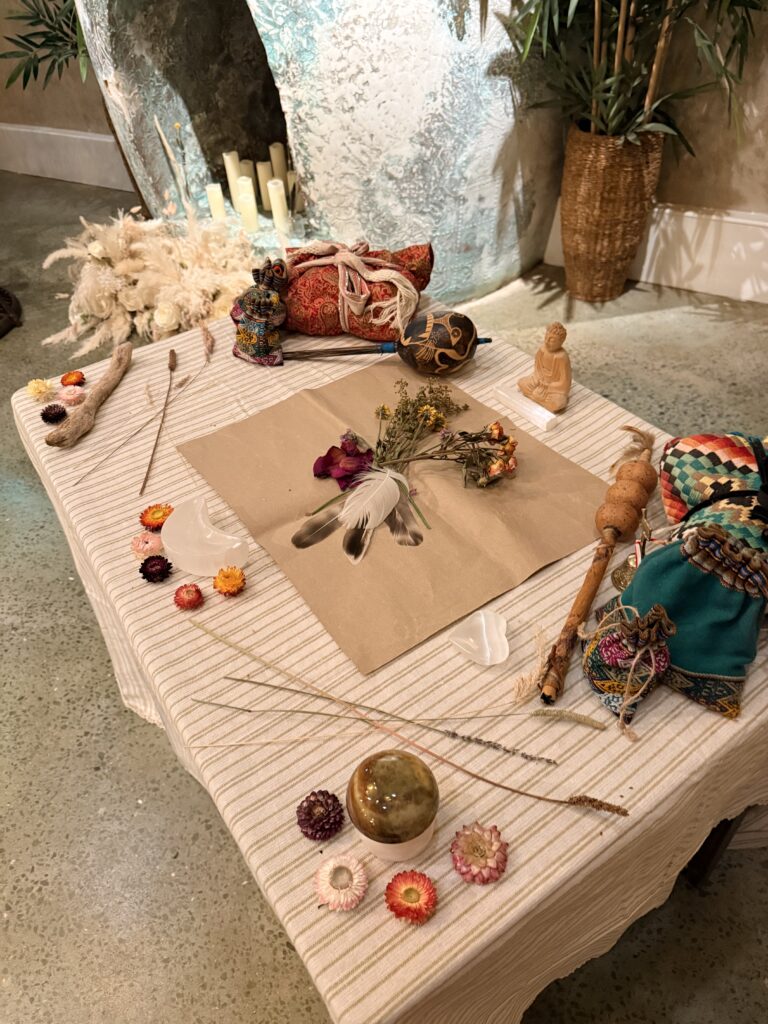
At the beginning of this year, I set an intention. I wanted to do more of the work that is most meaningful to me: weddings, funerals, namings and celebrations of life for spiritually minded people by offering spiritual ceremonies.
Something not many people know about me (because I’ve spent a long time keeping it to myself for fear of judgement) is that I consider myself a deeply spiritual person. I always have been. I draw inspiration from the old ways and from some of the newer ways too, and I’ve been a spiritual seeker for as long as I can remember. I grew up in a family that held both the old ways and a loosely held Christian doctrine, and somewhere in that mix, I started asking my own questions. I never landed on organised religion as the answer. For me, spirituality is a much bigger concept than faith or organised religion. It’s personal and it looks different for every single person.
As an independent celebrant, I’m passionate about your freedom of choice, but I can’t keep asking couples and families to be brave and open about who they are and what they believe if I’m not willing to do the same.
Over the last few years, I’ve noticed something happening in my practice. More spiritually minded couples and families have been seeking me out to craft a ceremony that honours their path. Sometimes that’s obvious from the first conversation. Sometimes it takes a little longer to surface, because people are often unsure whether it’s even allowed. I want to change that. It absolutely IS allowed! Since when do you have to seek ‘permission’ anyway?
Before going any further, this way of doing ceremonies and embracing your spirituality may not be for everyone. Some people actually do want a ceremony that follows a similar form to what they’ve seen before and there can be comfort in the familiar. There is no right or wrong way to approach a ceremony – it’s whatever makes the most sense to you within your own beliefs and each can be meaningful. I’m simply inviting you to consider a different form should you choose.
Spiritual vs Religious
Religion is usually a shared, organised system. It comes with a defined set of beliefs, texts, practices and often an institution that holds all of that together. It tends to answer questions in a fairly fixed way, and it’s practised collectively.
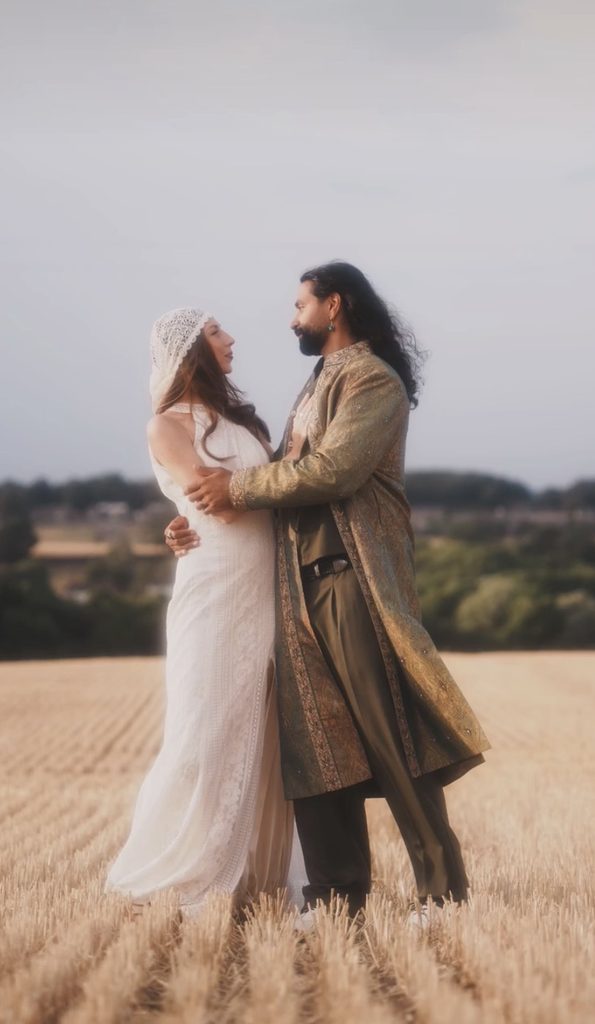
Spirituality is much more personal. It’s about how someone relates to meaning, connection, love, loss and the parts of life that don’t always have defined answers. It doesn’t need an institution, a specific text or a doctrine to be real. Someone can be spiritual and religious. Someone can be spiritual with no religion at all. Someone can hold a religious faith loosely and let their spirituality be the thing that actually guides them day to day. None of these are more valid than the others.
What Spiritual Really Means
One of the biggest misconceptions I come across is that spiritual ceremonies have to look a certain way. Candles, crystals, a particular kind of language. Sometimes that’s part of it, and sometimes it isn’t at all. For me, spirituality is a thread that runs through how someone sees the world, how they understand love, loss, connection and meaning. And what it means to you can evolve and change over time.
That’s why I conduct ceremonies for people across the whole spectrum. People with a defined spiritual path. People with a religious faith. People who hold mixed faiths within one family or one relationship. People with no faith at all, and people who wouldn’t call themselves spiritual or religious in any way. Every single one of those ceremonies teaches me something, and every one deserves to be built from the ground up around the people standing at the centre of it, not around a formulaic template.
Challenging Assumptions
A lot of people assume a ceremony has to look like every other ceremony they’ve ever been to. The same structure. The same phrasing. The same handful of readings. And if their beliefs don’t sit neatly inside a mainstream framework, they often assume there isn’t a place for them at all, or that they’ll have to strip back anything meaningful just to make it fit.
It’s an understandable assumption because most of the ceremonies people grow up witnessing come from a small number of familiar formats. But it isn’t true, and it doesn’t have to be your experience. A ceremony can be built around who you are, including a spiritual path that feels personal, unconventional, blended, evolving or still being figured out.
Honouring Your Path in Spiritual Ceremonies
Honouring a spiritual path in a ceremony can take so many forms. It might mean weaving in ritual elements drawn from ancestral or old ways traditions. It might mean acknowledging the seasons, calling in the directions, or the natural world as part of the ceremony’s structure. It might mean leaving space for silence, for something unspoken, or for a moment that isn’t scripted at all because it needs to arrive on its own terms.
It might also be far quieter than that. A single phrase that reflects how someone understands life and death. A symbolic gesture that means something only to the people involved. A structure that doesn’t follow the usual beginning, middle and end, because that’s not how this particular family or couple experiences meaning.
None of this requires abandoning tradition altogether, and it doesn’t require you to have all the answers about what you believe. It simply requires a celebrant who is willing to ask, listen, and able to build something that fits you rather than asking you to fit it.
Stepping Outside the Script
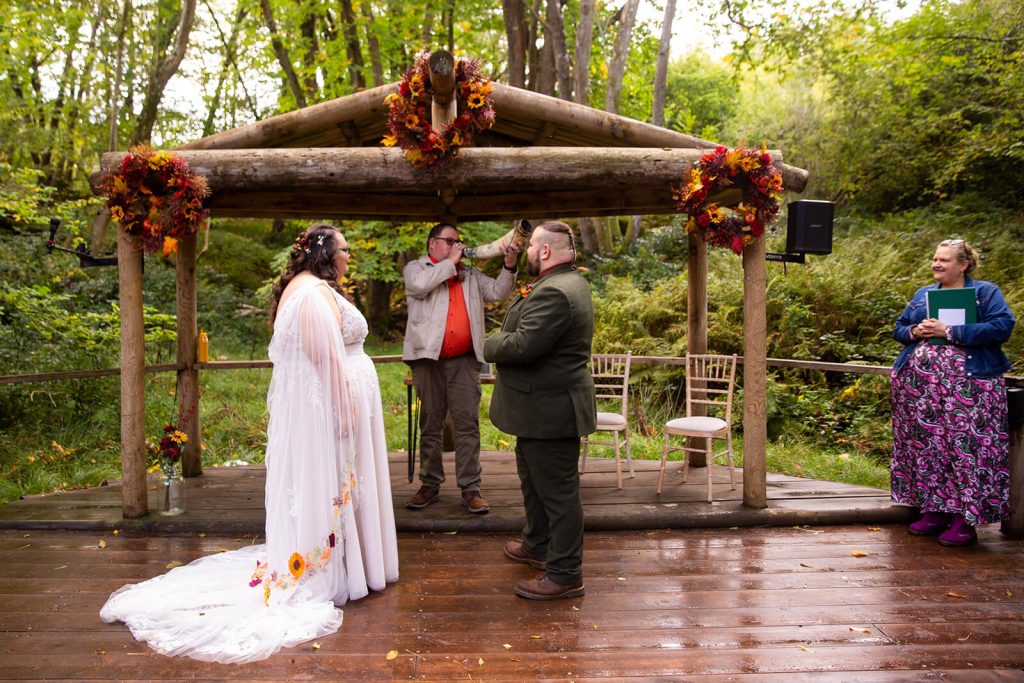
This year has pushed me further outside my comfort zone in the best possible way. I have found myself offering more ceremonies that include unscripted elements, moments where we feel into the energy of the day rather than following a fixed running order. We might arrive with a plan. We often do. But we might veer from that plan, depending on what the people in that space actually need in that moment. Sometimes I’m more of a facilitator, supporting people I’m with to step up and lead, rather than me performing the whole ceremony. I love that!
I love working with those who see why role as less about performance and more about holding the space. That’s not something you’ll find in a lot of typical ceremony formats. It takes trust to allow a ceremony to breathe like that. But it creates something far more honest than a ceremony that’s simply been read from start to finish. This is an area I’m continuing to explore, and I expect I’ll keep deepening this part of my practice for years to come.
But for now, I often find myself with a foot in both camps – those who want a script and those who want a space in which to explore.
Moving Away from the Old Model
As a celebrant, I’m super interested in exploring ceremony that moves away from the patriarchal pulpit and pews model, the one where someone stands at the front and everyone else sits facing forward in rows, watching rather than participating. That model has shaped how most of us understand ceremony, and I have no interest in dismissing what it has meant for people. But it isn’t the only way to gather, and it certainly isn’t the only way to mark something sacred.
I’m continuing to explore ceremony that feels much more cyclical and holistic. Ceremony that reflects the cycles we’re actually marking, the turning of a season, the turning of a life, the turning point two people are stepping into together, rather than a fixed structure handed down from the front of a room.

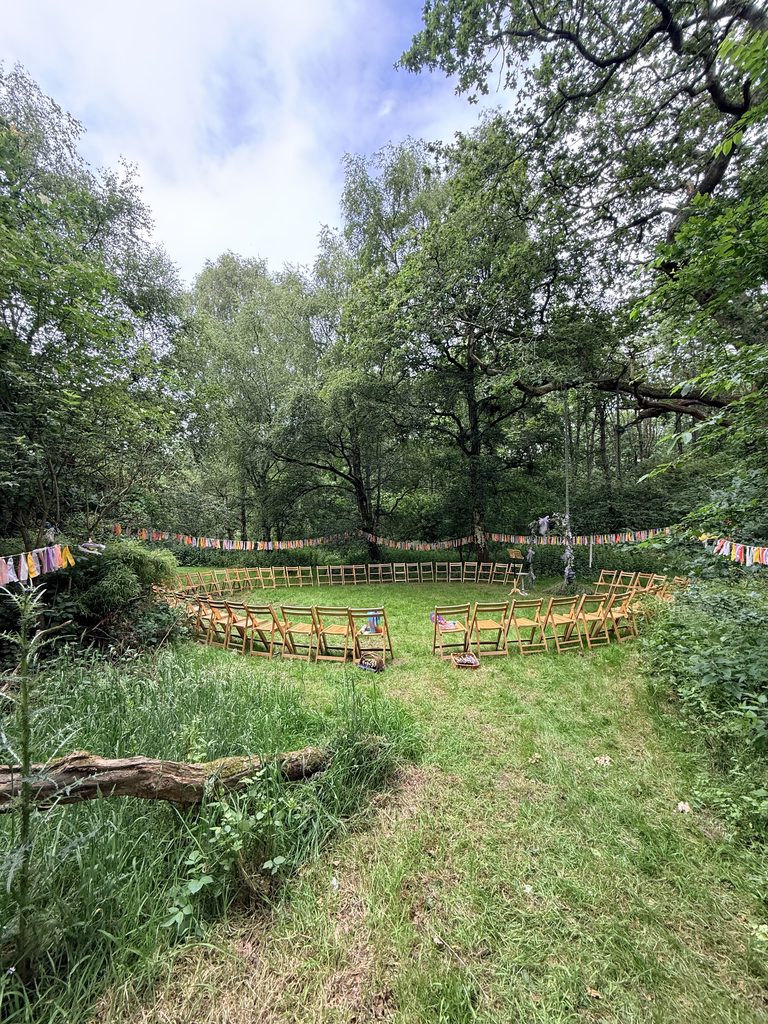
This also means I’m drawn to ceremony that doesn’t have to sit inside a traditionally defined space. It doesn’t need to happen in a church, a registered venue or a crematorium to be valid or meaningful. A ceremony can happen wherever feels right for the people gathered there, and reflect the spiritual path being honoured, rather than the ceremony being shaped by the four walls it happens to take place in.
We’re beginning to see more people are finding their own way back to older, more communal, more connected ways of marking these moments which feels less like something new and more like something we’re remembering.
What This Looks Like in Practice
Over the years I’ve had the honour of facilitating ceremonies that hold rituals like these, and I’m finding that more and more people feel drawn to similar elements within their own ceremonies. I have a background in community work and creative art therapies so this is my vibe!
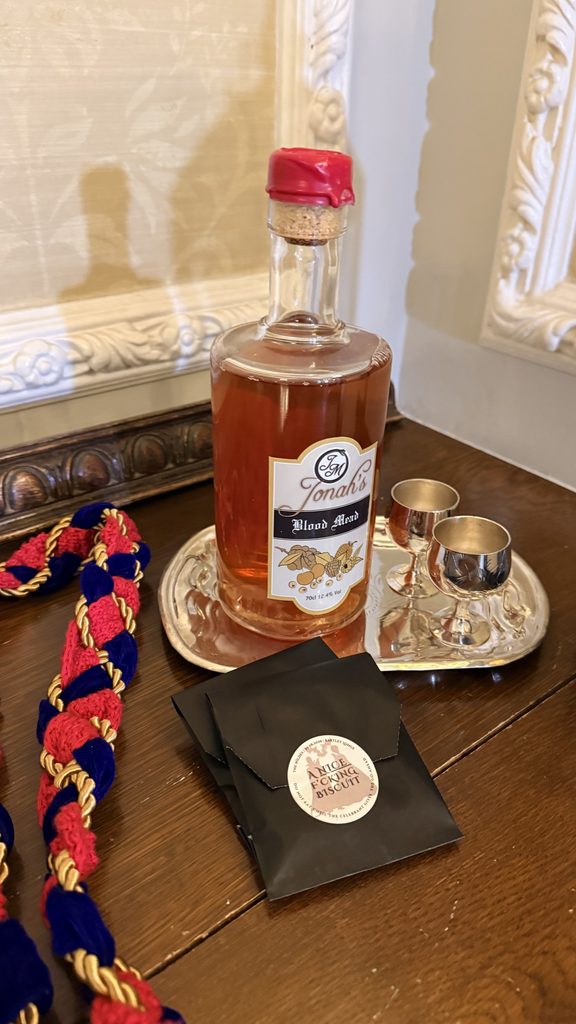
I’ve facilitated many full pagan handfastings, calling the directions, honouring the ancestors, and tying the knot itself with real intention rather than as an afterthought. I’ve supported couples in preparing an offering or a despacho, crafted with care and intention beforehand, then symbolically burnt during the ceremony as a way of releasing or offering something up. We’ve danced around stone circles, embraced meaning and danced through stories with joy.
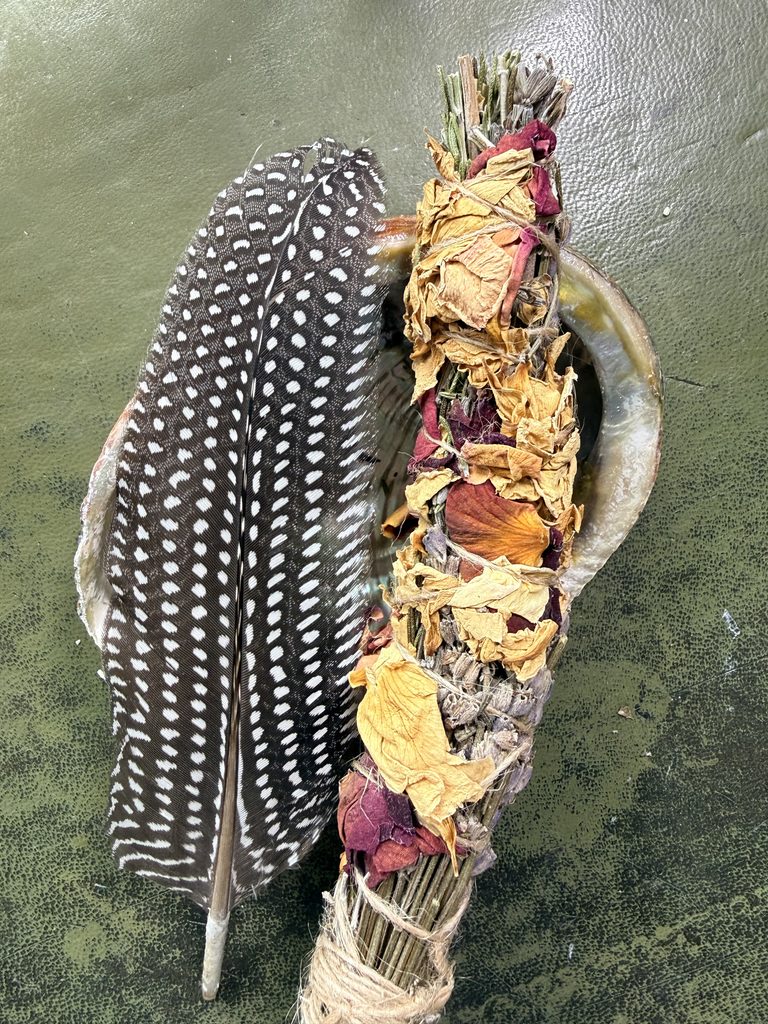
I’ve held blessing circles where participants are passed a piece of rose quartz, holding it while they share their thoughts about the person being honoured, each person’s words becoming part of something collective. I’ve built in moments of stillness and meditation, simply to support and set the space before a ceremony begins, giving everyone present a chance to settle. And I regularly smudge a space before a ceremony, inviting in the ancestors and clearing whatever energy needed to be cleared, so the ceremony that followed could unfold in a space that had already been prepared for it.
Every time, it’s reminded me why I do this work as a way of making a ceremony feel true to the people it belongs to.
Finding a Celebrant Who Can Hold Spiritual Ceremonies
If you have a spiritual path, however defined or undefined that might be, and you want it reflected in your wedding, your funeral, your naming ceremony or your celebration of life, it matters enormously who you choose to stand with you in that moment. Not every celebrant will be comfortable holding space for something unscripted.
I’m passionate about freedom of choice because I’ve spent much of my own life searching, questioning, and eventually finding peace in a spirituality that doesn’t fit inside a container. I bring that same openness into every ceremony I create, whether the people in front of me hold a deep spiritual practice or none of it at all.
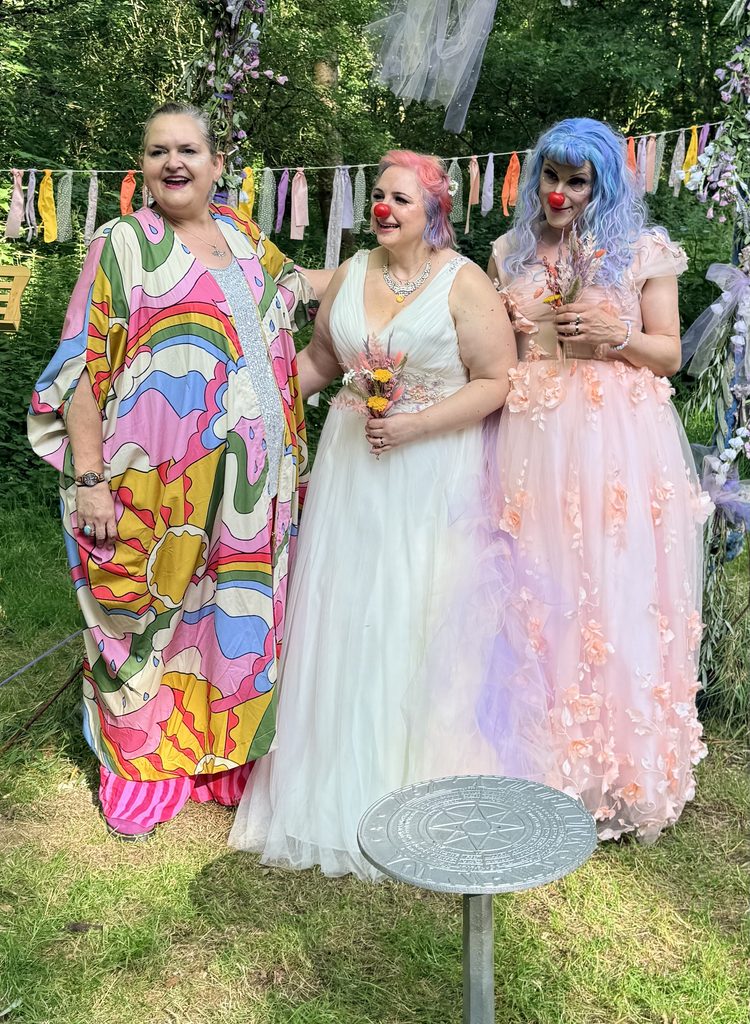
I never want to be the kind of celebrant who delivers a formulaic ceremony. Every ceremony I facilitate teaches me something new, and inspiration to carry into the next one.
So if you’re standing at the beginning of planning a wedding, farewelling someone you love, welcoming a new life into your family, or marking a milestone that deserves more than a generic script, and you want that moment to reflect your spiritual path, I would love to explore how to create it. Not a version of it that’s been dumbed down to fit expectations. The real thing, built for you, exactly as you are, and where you are in your journey.
If any of this resonates with you, and you’re looking for a ceremony that truly honours your path, whatever that path looks like, I would love to chat. Please get in touch. This is exactly the kind of conversation I want to be having!
Share the love