
How to Write Wedding Vows that Sound Like You (Not AI or a Template!)

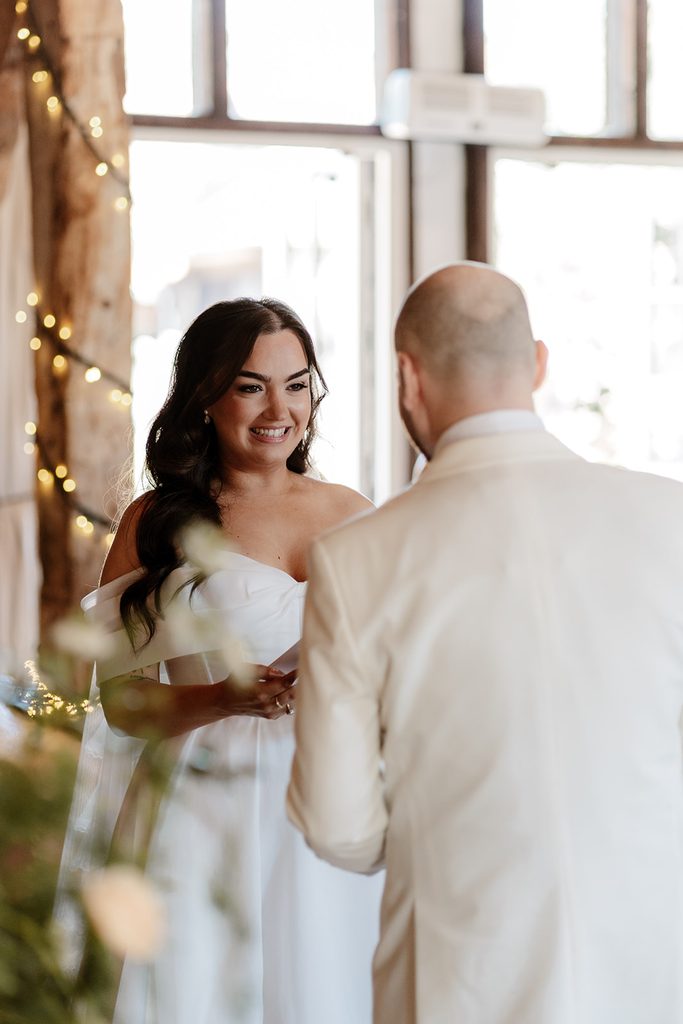
If you’ve been staring at a blank page wondering how on earth to turn your feelings into wedding vows – you’re not alone! Just about every couple I work with hits this moment. The pen (or phone!) goes down, and suddenly you can’t think of a single sentence to say to your partner on the biggest day of your lives.
The most important thing I want you to know is that writing your own vows isn’t about finding the perfect words. It’s about finding YOUR words. Once you understand the form of a good vow, the rest becomes much easier.
The point of this blog is to give you the tools and confidence that will empower you to write your own vows!
Why Personal Vows Matter So Much in a Celebrant Ceremony
The chances are that if you’ve chosen a celebrant led ceremony then you already know that you want something that is more personal to you, that felt like you and sounds like you. The same should be true of your vows.
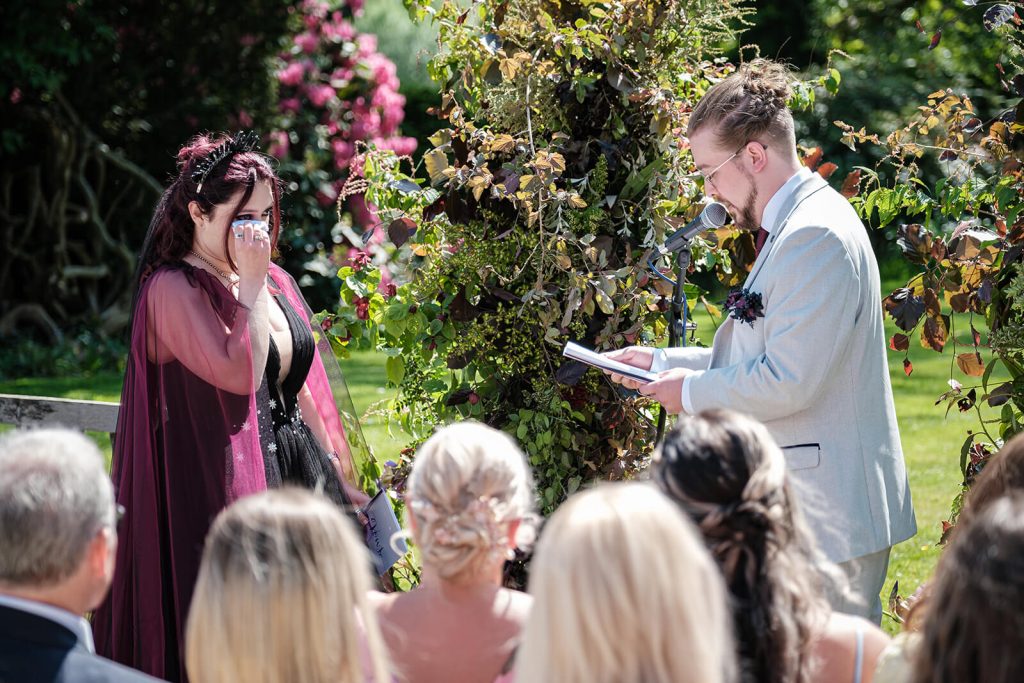
In a registrar led ceremony, vows are often short and formulaic for legal reasons. In a church service, they’re usually traditional and shared word for word by every couple who stands at the altar. There’s nothing wrong with that. But it’s not what most people choose a celebrant for.
Vows in a celebrant led ceremony are personal, longer and completely different from one person to the next. They can include stories about what the moment means to you, private jokes, your hopes and dreams for the future and so much more. This is the one part of the whole wedding day when you get to speak directly to each other, in front of everyone who loves you both, and say exactly what’s in your heart. That’s a rare thing and something to treat with reverence rather than a template!
Your guests will remember your vows. Long after the cake has been eaten, and the flowers wilted, people will still talk about your vows – moments that come from your authentic voice rather than polished perfection.

Why Your Own Voice Matters More Than Clever Words
I always tell my couples this. Nobody is marrying a poet. Your partner isn’t expecting Shakespeare – they’re expecting YOU!
If you’re someone who naturally cracks jokes when you’re nervous – put a joke in your vows to cut through the tension. If you’re the quiet, steady one who expresses their love through actions rather than big declarations, your vows should read that way too. Trying to write your vows in a voice that isn’t yours is like turning up to your own wedding in a costume. While it might look beautiful from a distance, the people who know you best will feel that something is a little off.
Think about the practicalities too. You have to stand up and say your vows out loud. That’s hard enough without having to read out phrases that don’t come naturally to you. When the words are truly yours, they’re easier to say, easier to recall and easier to deliver with real feeling.
This is why I discourage you from using AI, copying other vows or having someone else write your own. AI-generated vows might sound nice, but they’ll probably sound like a Hallmark greeting card! They won’t have your laugh in it or many of the specifics that make your relationship sing. Only you can write that. And once you know how, you really don’t need anything else.
Overcoming the Blank Page: Overcoming Common Blockages
Vow writing can feel incredibly difficult. But once you understand the blockages that are holding you back, you’ll be able to move beyond it.
- You think it has to be perfect. Vows aren’t a polished performance! They’re a love letter. Nobody is marking you on your poetic prose! Give yourself permission to write something rough first and tidy it up later.
- You’ve never had to put your feels into words before. Plenty of people tell me that they know how they feel but have never had to articulate it before. Feelings live in your body and your mind, not in ready made sentences. The trick is starting with stories and moments rather than trying to summarise your entire relationship into one sentence. Being specific beats being vague!
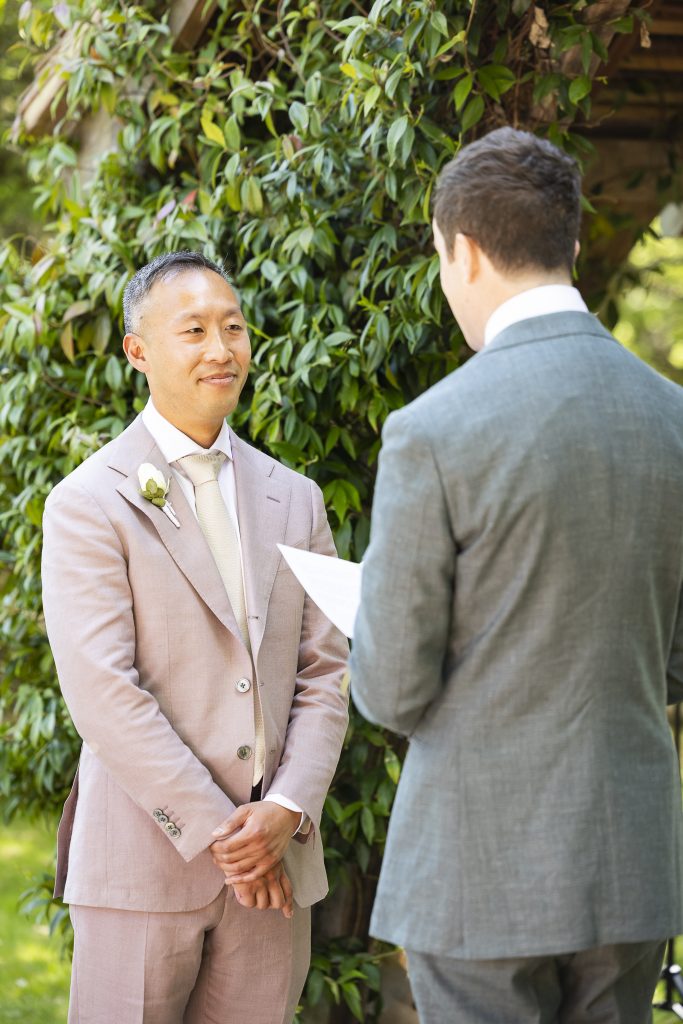
- You’re worried about getting emotional. I hear this the most. A few tears is not a disaster. In fact, it’s usually the moment guests remember fondly. Pace your vows, build in pauses, and know that getting emotional is not a sign of weakness. It shows that your words really matter.
- You don’t know where to start. This is a big one and it’s why having a structure helps. When you’re not starting from a blank page but rather a framework with clear sections, the whole task becomes much less daunting. Which brings us to the method I walk every couple through.
The Vow Burger
I call this framework the Vow Burger. Once you see it laid out this way, something will click. Think of your vows like a burger. There’s a bun on top, a bun on the bottom and the filling that makes it worth eating.
Top bun – the opening. This is where you set the tone. Address your partner directly. Share a paragraph or two about what this day, this moment means to you or a memory that captures your relationship. Talk about your hopes and dreams for the future. It doesn’t need to be clever!
The filling – your promises. This is the heart of your vows and where most of your words will live. Write out 3 to 5 promises you wish to make to your partner. They shouldn’t be generic. Talk about a specific quality you love in your partner and turn it into a promise. If they make you laugh when you’re stressed, promise to laugh with them through the hard days as well as the good ones. If they’ve taught you how to be patient, tell them that, and promise to keep learning from them. Talk about the future you’re building together and what you promise to do to support that growth.
Bottom bun – the closing. Bring everything to a close with a final sentence that sums it all up OR could be as simple as ‘I love you.’
Usually, once couples see their vows in these three layers, the panic shifts. You’re not writing an essay. You’re writing three smaller manageable sections, each with a clear job to do.

My Top Tips for Writing Vows
Start writing weeks if not months before the wedding – NOT days! Like a fine wine (!), good vows need time to mature. Write a rough draft, walk away from it for a while and come back to it with fresh eyes. You’ll see things you want to change or evolve.
Write your first draft the way you’d talk, not the way you’d write an essay. You might find talking into a voice note on your phone will help you to articulate your feelings in your voice, then transcribe it on to paper. Finesse your writing and then read it out loud to yourself. If it doesn’t sound like you when spoken, then it’s not quite fully baked yet.
Use specific details. Names, places, quirks, inside jokes. These are the details that make vows more unforgettable than lofty statements ever will!
Keep them a surprise from your partner. Most of my couples choose not to share their vows with each other before the big day and it’s one of my favourite parts of the ceremony! That moment when you first hear your partner’s words, in front of everyone, adds a layer of raw emotion you simply can’t fake.
However, for some, vows are a very private thing just between the two of you. Regardless of whether you share them in front of an audience or keep them to yourselves, making them a surprise to each other is highly recommended!
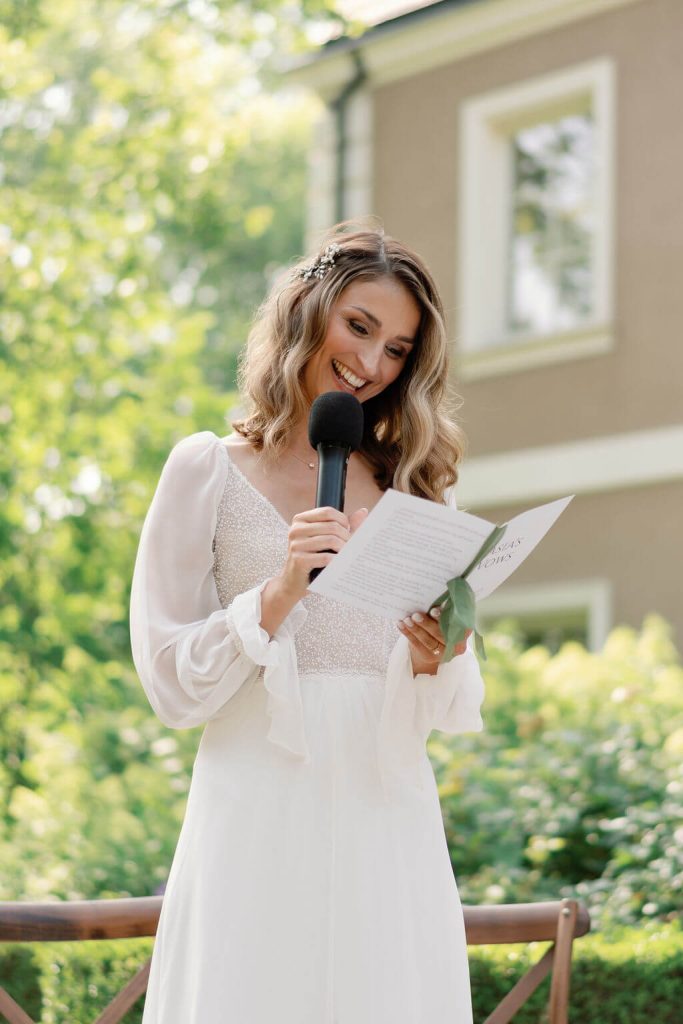
Read from a printed vow booklet, not your phone. I make sure every couple I work with has a beautifully printed booklet to read from on the day. It’s steadier in shaky hands, looks lovely in photographs and means you’re not fumbling with a screen at the most important moment of your ceremony (same goes for speeches later in the day too!).
Time yourself. Two to four minutes each is usually the sweet spot for personal vows. Or around half a page per person. Long enough to say what matters, short enough to hold attention.
Get support if you need it. If you’re still stuck, get help. If you book me as your celebrant, I will share my vow writing guide and take you through a Vow POWer Hour workshop to help you get started and find the right words to say what’s already there inside!
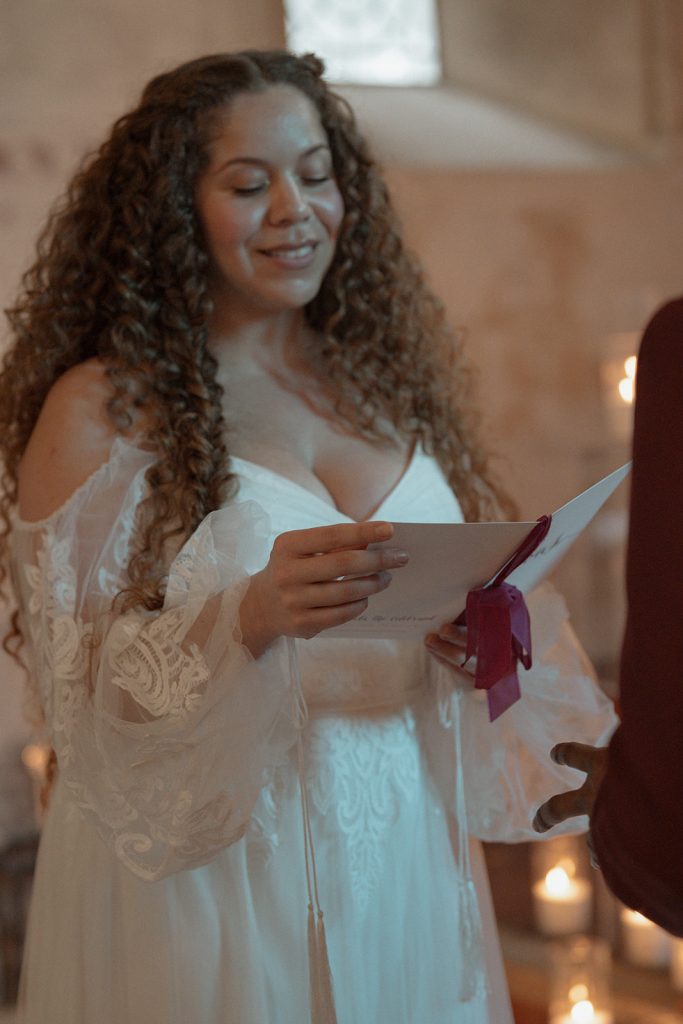
Your Vows, Your Voice
Writing your own vows is one of the most meaningful and empowering things you’ll do in the lead up to your wedding day. It asks you to sit with your relationship, really think about it, and put it into words that only the two of you could have written. That’s not a task to hand over to a machine or a template. It’s one worth really giving your heart to.
Once you understand the shape a good vow takes, the Vow Burger structure, specific stories over vague statements, an opening that draws people in and a closing that warms the heart, the words tend to come far more easily than first thought. And when you stand up on the day and read from your own booklet, in your own voice, saying things only you could say, that’s when your partner will feel it. And that’s the whole point!
If you’re struggling to find the words, I’d love to help. I have a free vow writing guide available to couples who choose to work with me on their wedding day. Get in touch for a chat!

Share the love