
Day of the Dead: What Mexico’s Most Colourful Festival Can Teach Us About Love

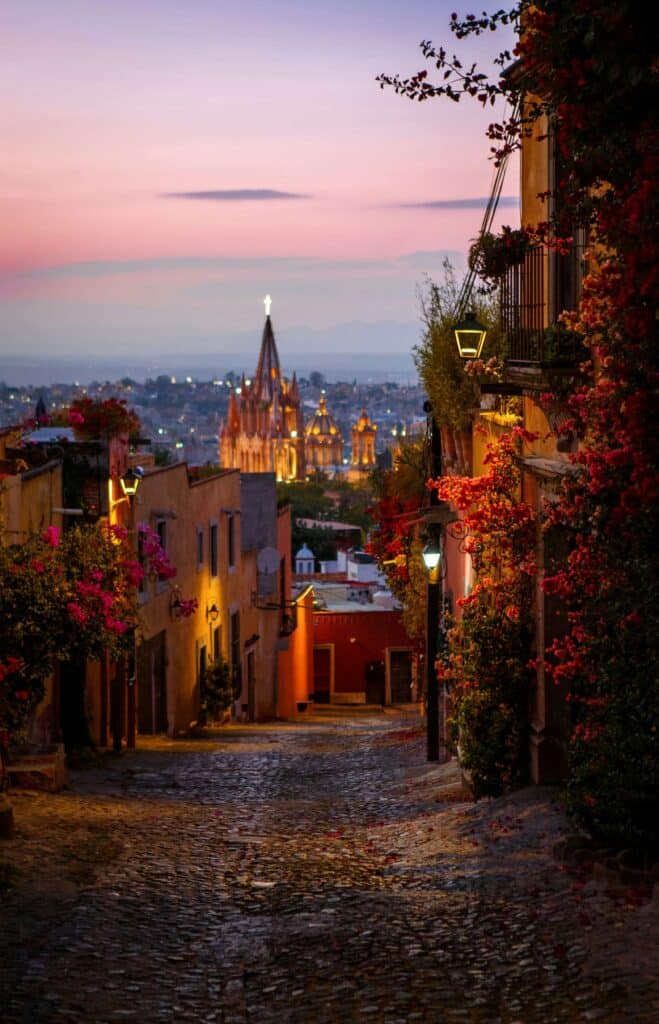
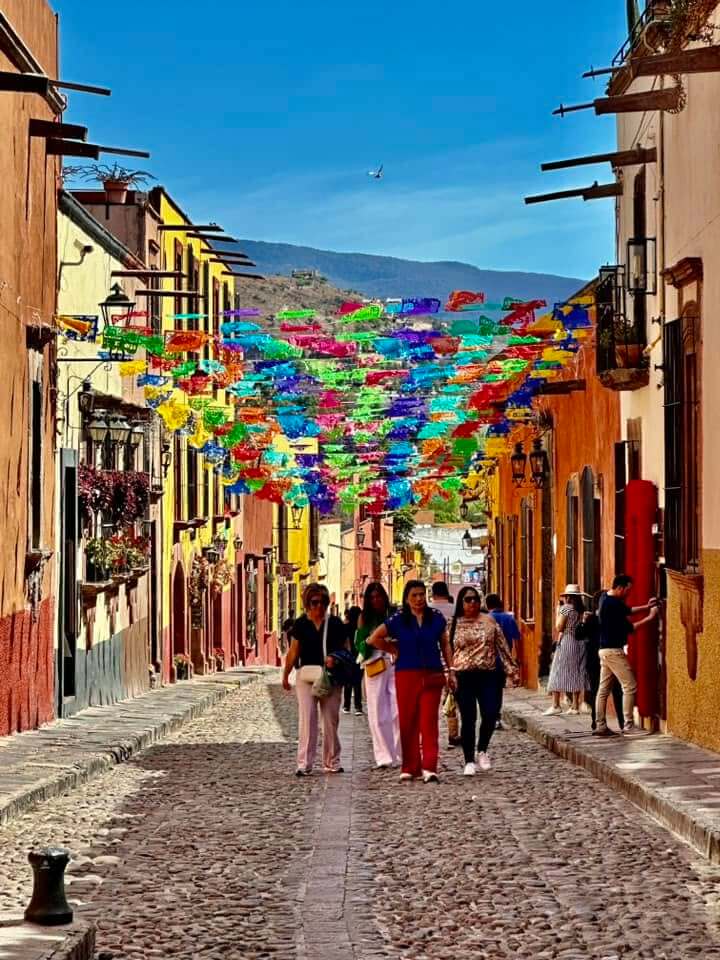
Some places get under your skin and never quite leave. For me, that place is Mexico. Ten years ago, we spent 14 months living in San Miguel de Allende, a beautiful colonial town tucked up in the mountains of central Mexico. This time of year, always takes me back there. San Miguel always screams colour and history. Thick cobbled streets, sunset coloured houses in terracotta and pink, bougainvillea tumbling over old stone walls and the fairytale spires of the Parroquia above it all. I miss it!
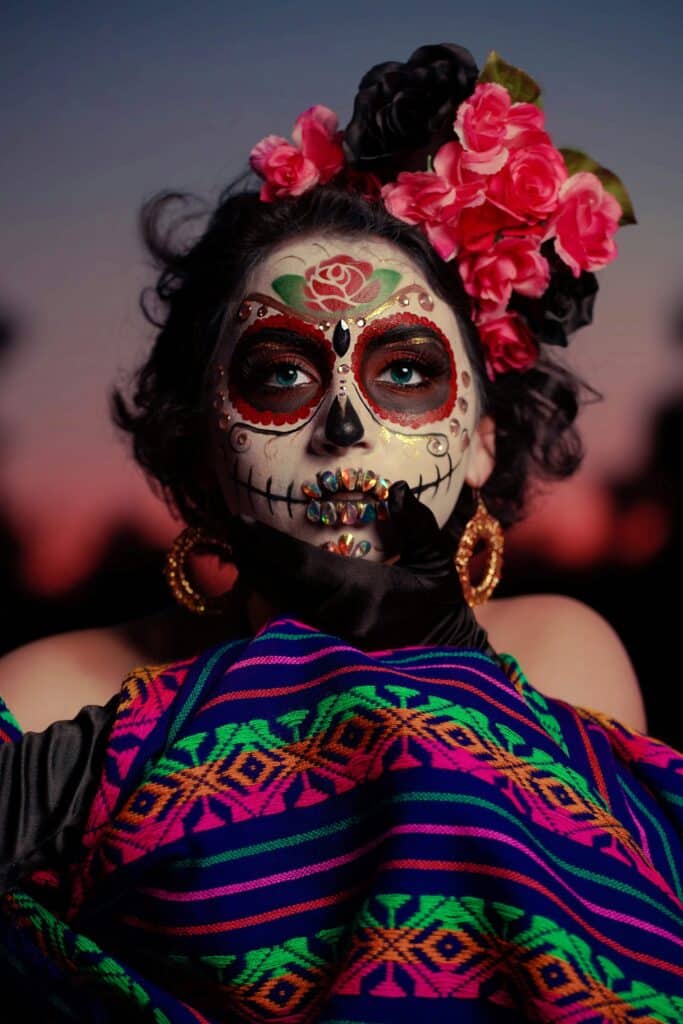
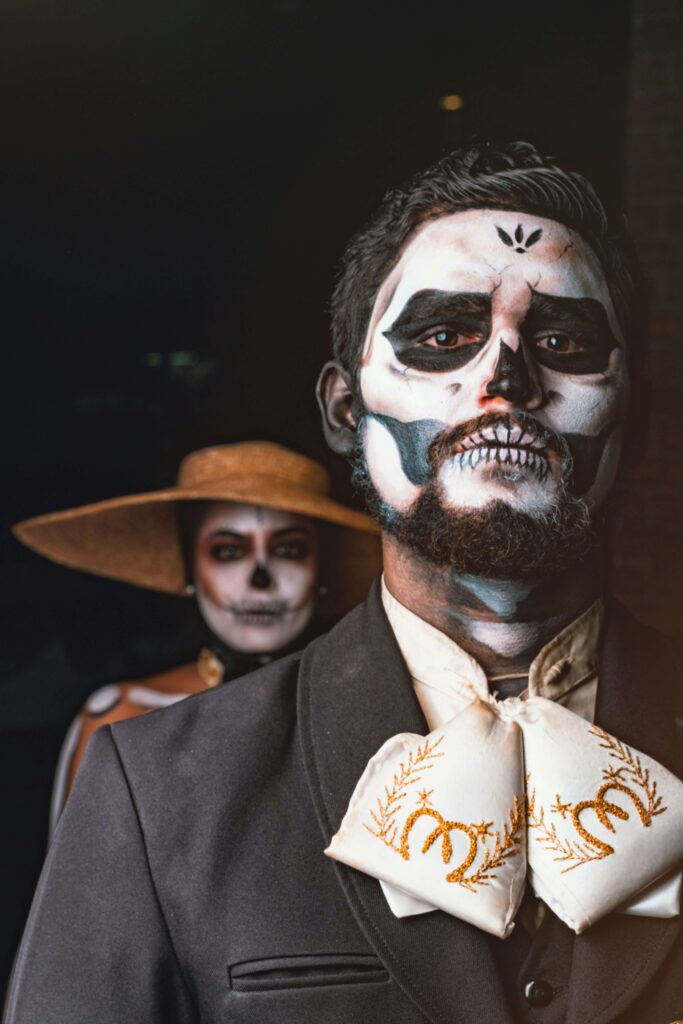
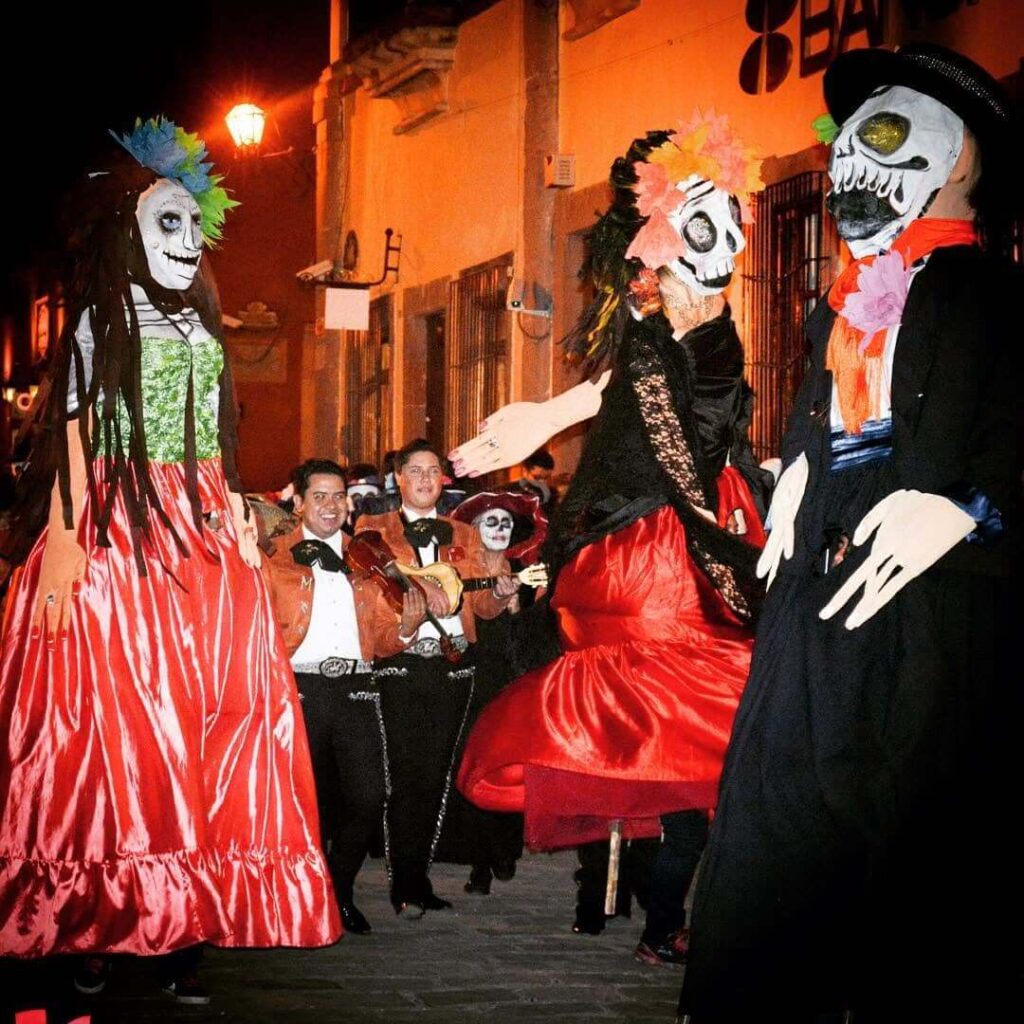
It’s also a town that knows how to celebrate. Every autumn, people from all over the world pour into San Miguel for Day of the Dead or Dia de los Muertos, and the whole place transforms. It becomes a riot of celebrations and parties for a whole week. Garlands of fresh marigolds spill out of every doorway, altars are prepared in homes, shops, restaurants, churches and parks. Streets will hum with the sound of mariachi bands, people have their faces painted, dress up and parade through the town.
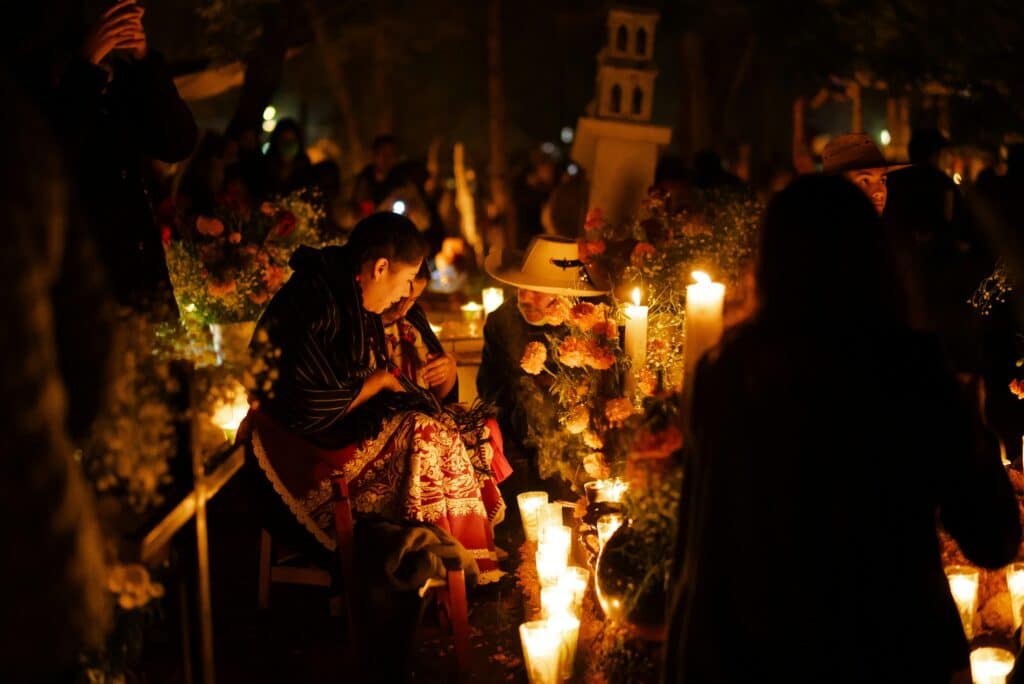
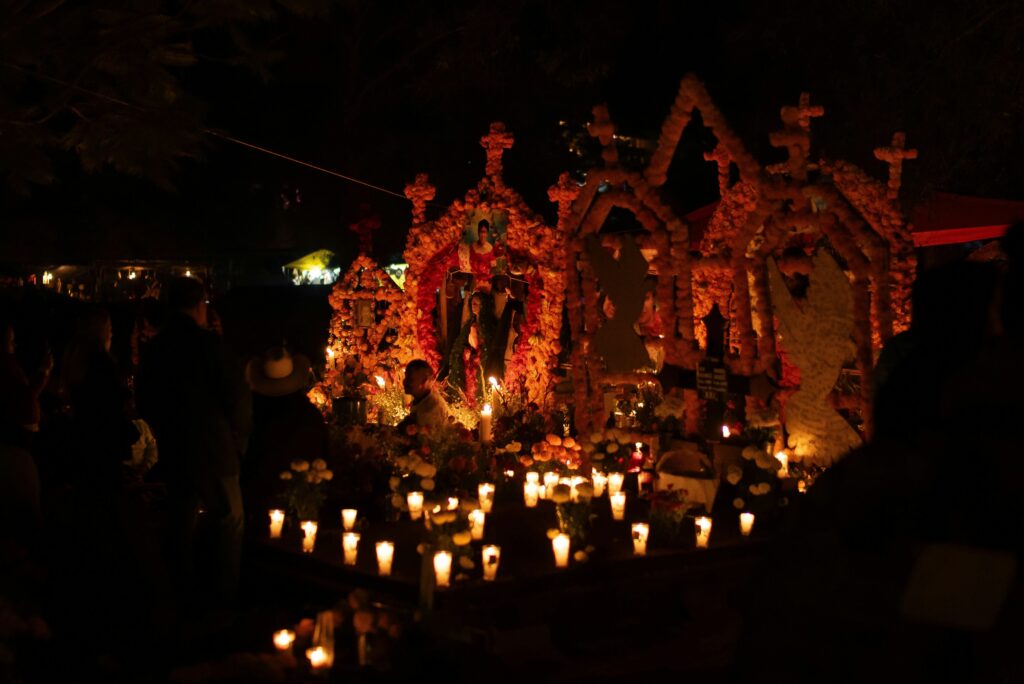
But, behind all the noise and colour, there is something quieter and more moving. On 2nd November, after dark, families gather at the gravesides of their ancestors, decorated with marigolds, offerings and candles. They raise a glass, share some food and honour their ancestors returning to visit on the night when the veil is thin. Mexicans have a gift for marking life’s milestones in full technicolour and nothing captures that better than Dia de los Muertos, the Day of the Dead.
It really is my favourite festival. It might sound odd to love a festival celebrating death. But it’s not about death at all. It’s about love, memory, and refusing to let the people we’ve lost slip quietly into silence.
And, I think we here in the UK have a lot to learn from it.
What is Day of the Dead?
Dia de los Muertos takes place each year on 1st + 2nd November, although preparations begin weeks before. Traditionally, 1st November is set aside to honour children who have died and 2nd November is for adults. The belief is that for a short time each year, the veil between the living and the dead thins and our loved ones come home to visit.
The festival blends indigenous traditions stretching back thousands of years with the Catholic feasts of All Saints’ and All Souls’ Day, brought over by the Spanish. In 2008 UNESCO recognised it as part of the intangible Cultural Heritage of Humanity, because it means so much.
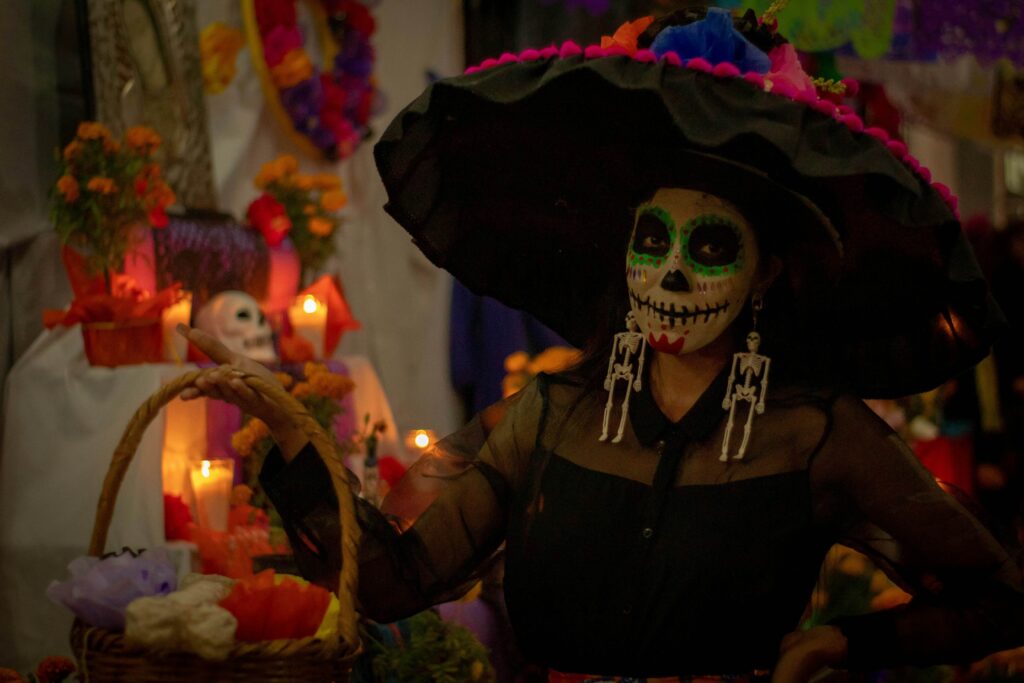
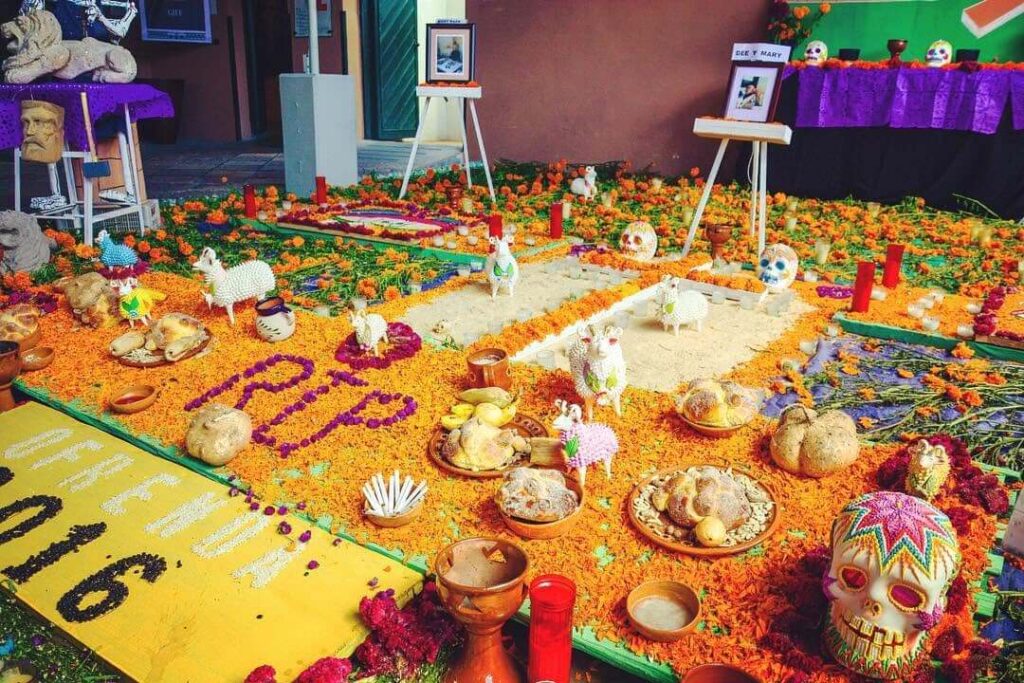
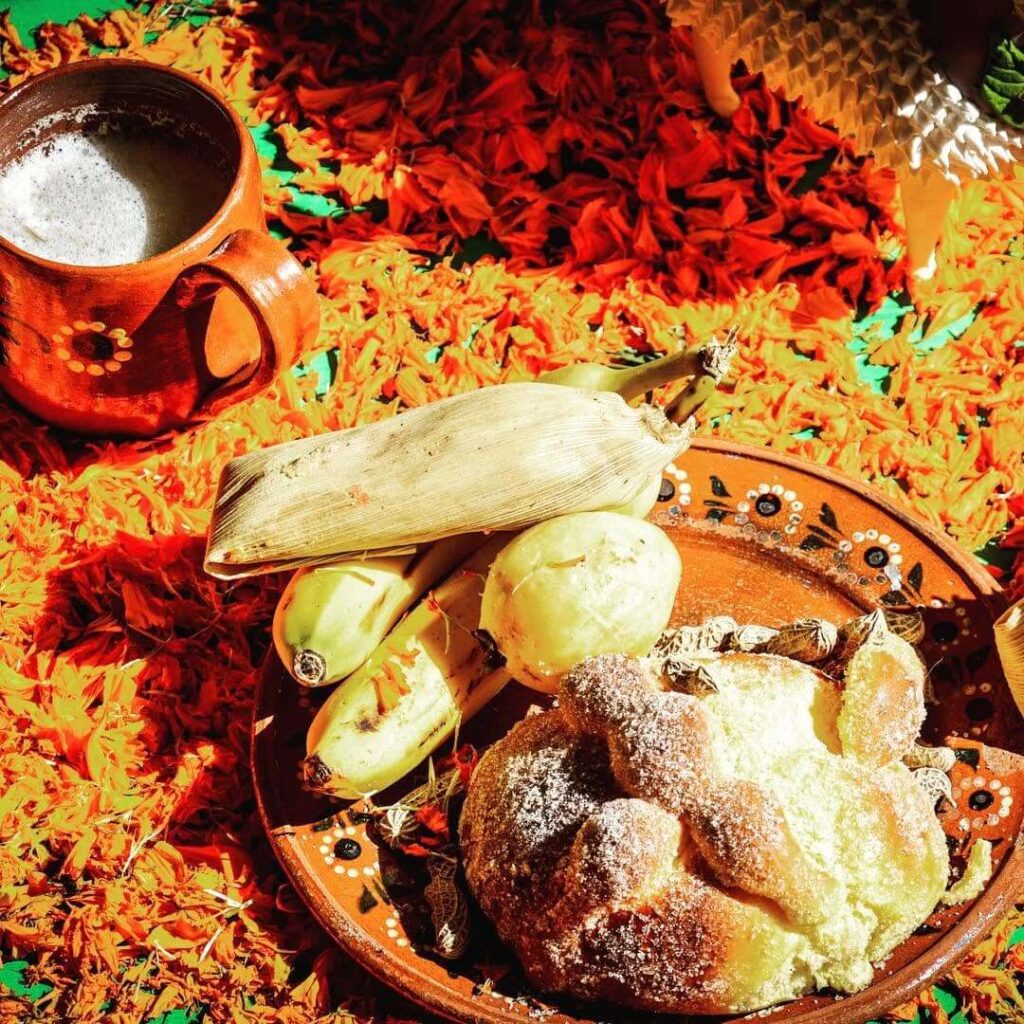
At the heart of it all is the oferanda, an altar built to welcome returning spirits. Families fill it with photographs, candles, the favourite food and drinks of the people they’re honouring. Every single object tells a story.
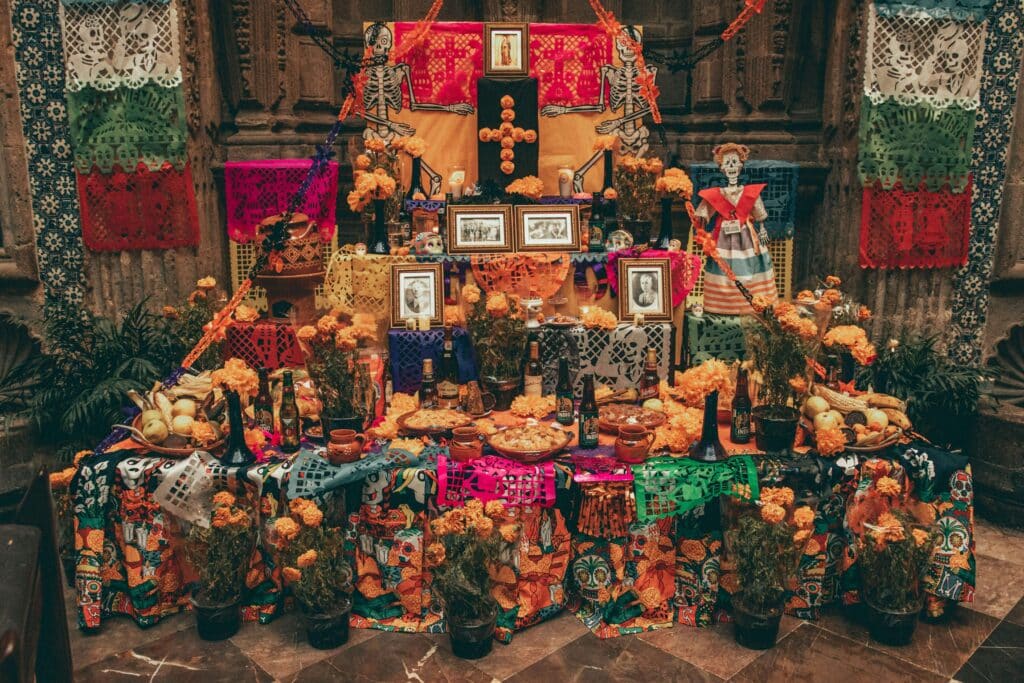
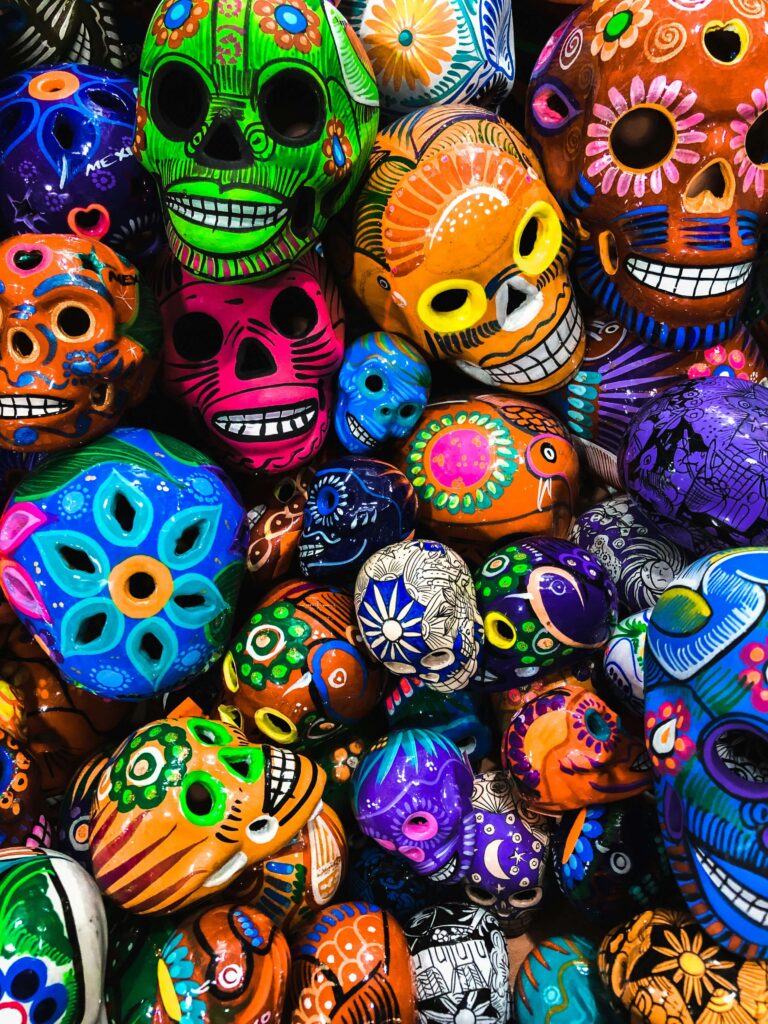
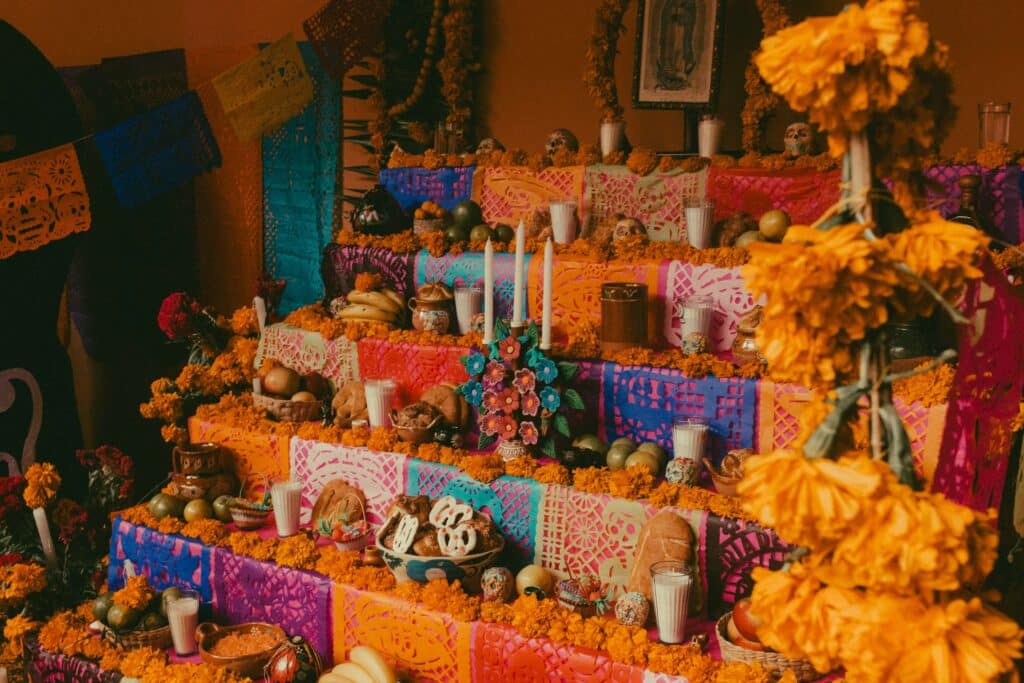
Then there are garlands of marigolds, or cempasuchil, piled high on altars and scattered to create glowing orange paths to guide the spirits home. Add papel picado, delicate cut tissue paper squares fluttering above the streets, sugar skills with names iced across their foreheads, and pan de muerto – a soft sweet bread decorated with little bone shapes. Somewhat of an acquired taste! Families visit graveyards to clean and decorate graves and many stay up all night to celebrate over food, drink candles and music.
This is not Mexican Halloween. The dates sit side by side, but the spirit is different. Halloween plays with fear, while Day of the Dead is all about love.
Why Honouring our Ancestors Matters
What moved me most in Mexico was how natural these kinds of celebrations felt. Nobody whispered about the dead. Grandparents who passed away ages ago were spoken about as if they’d just popped to the shops. Their recipes were cooked and jokes retold. Their photos had pride of place.
For me, that was the real gift of Dia de los Muertos. It’s a festival that keeps a family story alive. There is a saying that you often hear around this festival that says we die three times. Once when our body stops, once when we’re buried and a final time when no one remembers us anymore. Dia de los Muertos exists to make sure that third death never comes.
In a world that moves so very fast, I find it incredibly grounding to return to this time each year. Building an oferenda (altar) means sitting down and really thinking about who came before you. Where did they come from. What did they love? What did they hand down to you without you even noticing? Honouring ancestors is about giving gratitude and understanding that we’re a part of a story far longer than a single lifetime.
I remember visiting friends’ houses in October and marvelling at the oferendas in their hallways, living rooms and courtyards. Created with such care and intention. Each one told a story in a visual yet moving way. Oferenda’s sparked conversations about friends and loved ones that I hadn’t heard before. How often do we pause to do that in our own culture?
What I learnt in Mexico is that grief and remembering isn’t a private weight carried on your own. It’s something the entire community does side by side.
Making Room For Our Own Grief
Grief isn’t linear. It doesn’t politely pack itself away after the funeral or on anniversaries. And yet, so often, we behave as though it should!
Dia de los Muertos offers something many of us are missing – permission. Every year there’s a set time to grieve openly. To cry, to laugh, to sing, to dance and to say their names out loud – and nobody thinks you’re being morbid or that you ought to have moved on by now. Grief is given a home, a ritual and a place on the calendar.
Grief experts often talk about “continuing bonds”, the idea that healthy grieving isn’t about letting someone go, but about finding a new way to stay connected to them. Mexican families have been doing this for centuries. Setting out a loved one’s favourite food is a way of saying you still matter, and you’re still a part of this family.
The humour helps too. The grinning sugar skulls, the dancing skeletons, La Catrinas in their feathered hats and even cheeky poems called calaveras literarias written as mock epitaphs for friends who are very much alive. These things take the sting out of death without pretending it isn’t real. Laughter and tears sit side by side – and isn’t that how grief feels sometimes?
Since living in Mexico, I’ve often wondered how much gentler grief might feel if we had a day like this. A day where it’s ok to miss them. It’s ok that it still hearts and it’s ok to smile when you remember them too.
Lessons We Can Learn
We Brits aren’t always brilliant at talking about death. We avoid it. We do a lovely funeral, a cup of tea and a slice of cake afterwards and then we tend to go very quiet – which can be incredibly difficult for many. So, what could we borrow from the Mexican traditions?
Say their names. Talk about the people you’ve lost in everyday conversations
Make a memory corner or box. You don’t need a full ofrenda. A shelf with photos, a candle and something they loved is enough to keep them present.
Cook their favourite dish. Food and drink carry memories like nothing else. Make Grannie-Mum’s rice dish or Mum’s favourite chicken roast and tell the stories while you eat.
Turn grave visits into gatherings. Instead of a quick visit to the grave or crematorium. Sit a while, take a picnic and share a memory or two.
Share their stories with your children. Children are naturally curious about where they come from. Show them the photos, tell the stories.
Give grief a date in the diary. We already have All Souls’ Day on 2nd November and it slips but unnoticed. Why not claim it as your own day to remember?
Let joy in. Remembering doesn’t mean you have to be sad. Play their favourite music. Make a toast. Laugh at the daft things they used to do.
Dia de los Muertos is a sacred tradition – not a fancy-dress theme. Borrow the spirit of it, take time to learn what it means and support Mexican businesses and communities in your own country. That’s the best way to honour it.
Whenever I think of San Miguel at this time of year, I see our chosen family and friends dressed up, celebrating and remembering the people they love. It really is the most alive I have ever seen a celebration of the dead. That’s it in a nutshell. Death isn’t the end of love. Our ancestors live on in our stories and our grief, however old or new, deserves a seat at the table.
Join me this November as I light a candle, put out photos of our parents, cousins and friends who have gone, and say their names out loud. I promise you – it helps and it feels a lot like coming home.
_____________
Dedicated to my brother from another mother, and ex-husband Joseph, who brought us to Mexico to share his life with his amazing husband Eduardo and first introduced me to Dia de los Muertos. Joseph passed away in November 2023 and we honour his memory every year by celebrating his life on Day of the Dead.
Share the love